
Unravelling Roman Hairstyles
Updated: Oct 4
Find out how one woman’s interest revolutionised our understanding of women’s hair in Ancient Rome!

When hairdresser Janet Stephens visited the Walters Art Museum in 2001, she found herself fascinated by a collection of Roman portrait busts. Unlike many museum displays, these sculptures stood in the centre of the gallery rather than against the wall, allowing visitors to view them from every angle. Looking at the backs of the statues, Stephens noticed something that most people overlooked: their complex hairstyles! How had Roman women created these astonishingly intricate styles?
Back home, Stephens pulled out a long-haired mannequin and tried recreating the hairstyles herself. Almost immediately, she hit a problem. Modern hair pins and bobby pins simply couldn’t support the elaborate structures she saw in the sculptures! Determined to solve the mystery, she began researching ancient sources and experimenting with different techniques. Within six years, she taught herself to be an expert in the academic field of ancient Roman hairdressing.
So how do we know how Roman women styled their hair? One answer comes from a field called experimental archaeology. Rather than simply studying ancient objects, experimental archaeologists try to recreate them using the same materials and techniques available in the past. By doing this, they can test ideas and uncover practical knowledge that isn’t always recorded in written sources.
Hairdressing is a perfect example. Very few surviving Roman texts actually describe how hairstyles were created! Like many personal services in ancient Rome, hairdressing was considered a low-status occupation, usually carried out by enslaved people or former slaves. Yet despite the lack of written evidence, Roman sculptures preserve remarkable details about fashionable hairstyles.

Early imperial styles were relatively simple. Women commonly wore their hair in a bun at the nape of the neck or on top of the head, often secured with a fabric band. During the reign of Emperor Augustus, however, hairstyles became increasingly elaborate. Towering curls, intricate braids, and complex up-dos soon became symbols of wealth and status.
Unlike Roman men, whose clothing often reflected their social position, elite women displayed their status through jewellery and hair. A simple hairstyle suggested a lack of wealth or refinement, but noblewomen could spend hours each day having their hair arranged by a skilled slave known as an ornatrix, often assisted by one or two helpers. Even women of more modest means enlisted friends or relatives to imitate the latest fashions.

Creating these styles required considerable skill. Hair might be curled around a heated bronze rod called a calamistrum, braided, teased, twisted, wrapped, and tied with cords or ribbons. Bone, ivory, jewelled hairpins, and decorative combs helped secure the final result. Some women even wore reticulae, hairnets woven from fine gold wire.
Roman beauty products could be just as adventurous. Beeswax served as the main styling product, while hair dyes were made from a surprising range of ingredients. Henna could produce reddish tones, while black dye might be created using leeches soaked in wine and vinegar for forty days. Those hoping to prevent grey hair could apply pastes made from herbs and even crushed earthworms. Ancient beauty standards were clearly not for the faint-hearted!
Long, thick hair was highly prized because it allowed for more elaborate styles. Women whose hair had thinned with age often relied on hairpieces, extensions, or padded wool inserts to create the appearance of volume. As Ovid says in Ars Amatoria III, "But there are not more acorns on an oak tree, more bees on Hybia, or wild beasts on the mountains, than there are modes of doing a woman’s hair."
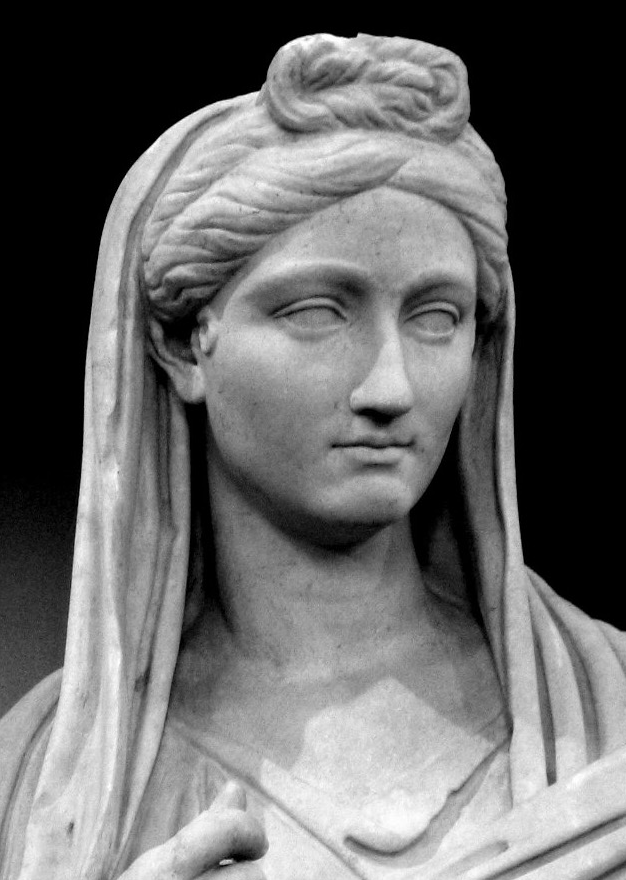
When Stephens began her research, many scholars assumed that the most extravagant hairstyles seen in Roman portraits were actually wigs. Archaeologists were also puzzled by some of the objects found in women's ‘beauty cases’, or mundus. While combs, mirrors, and cosmetics were easily identified, there were also larger, thicker needles made of bone or glass that they didn’t understand.
Stephens approached the problem from a hairdresser's perspective. First, she asked whether Roman portraits reflected real hairstyles or simply idealised images of status and beauty. Examining statues and coins closely, she noticed details familiar to anyone who works with hair: the idiosyncrasies of hairlines, cowlicks, growth patterns, the directional movements of short hair, or the wispy hair at the nape of the neck with longer hair.
The sculptures even seemed to show where hair was parted, how braids were woven, and the direction individual locks had been twisted! These details convinced her that the hairstyles were real. The mysterious needles, she proposed, were not sewing tools for fabric but for hair! Using wool thread dyed to match the wearer's hair colour, an ornatrix could literally sew sections of hair together. Stephens experimented with hairpins and other methods, but sewing consistently produced the most secure and comfortable results.
The thread would add little bulk to the hairstyle, and stitches could be placed that wouldn’t ruin the beauty or comfort of the style. Aesthetically perfect ponytails, the foundation of many Roman hairstyles, are even easier to make via sewing than with modern elastic hairbands! By sewing braids together and anchoring them with wool yarn, an ornatrix could create styles that were taller, wider, and more elaborate than previously thought possible. What had seemed like impossible feats of hairstyling suddenly became entirely achievable.
Stephens' work is a wonderful reminder that understanding the ancient world sometimes requires expertise from unexpected places. In this case, a modern hairdresser succeeded where generations of archaeologists had struggled simply because she knew how hair behaves.

If you'd like to see these techniques in action, have a look at Janet Stephens' YouTube videos, where she recreates Roman hairstyles using the same methods she believes ancient hairdressers employed. You might even want to recruit an adult and try a few ancient hairstyles yourself!
Until next time,
λεῖος πλόος!
Written by Eleanor-Scarlett Russell
Education and Programs Officer
Hellenic Museum


Comments