
Swooping Season: Stymphalian Birds
All you need to know about killer birds with bronze beaks and detachable metal feathers!
DISCOVER
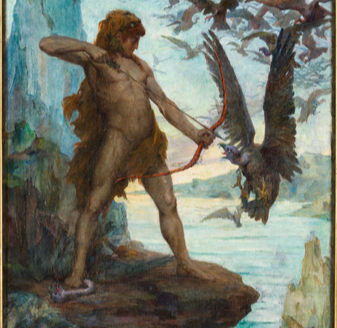
Is it a bird? Is it a plane? Is it…. Well actually, it WAS a bird. The Stymphalian were highly unusual-looking mythical birds, made famous by their appearance in the Labours of Heracles myth. Their origin story suggests that they got their name because, after fleeing from wolves, they started swarming Lake Stymphalia. Lake Stymphalia is home to a number of real birds and it is located in Corinth, in north-eastern Peloponnese (southern Greece). It sits at the base of two mountains, Mt. Oligirtos and Mt. Cyllene.
The Stymphalian birds were first described by Pausanius, a Greek travel writer, historian, and geographer, who wrote that they arrived in Greece from the deserts of Arabia, southwest Asia. Not much is known of Pausanius’ personal life but he lived from approximately 110 CE to 180 CE. In this time he travelled throughout Greece, linking its geography and landscape to Greek mythology which he wrote about in his work Description of Greece.
Pausanius described these mythological birds as being of a similar size to a crane or ibis. He wrote that the man-eating Stymphalian birds were able to pierce through bronze or iron armour with their powerful bronze beaks. It was said that the safest defence against them was wearing cork because their beaks would get stuck. However, he noted the most dangerous thing about Stymphalian birds was their ability to release their sharp metal feathers like arrows and kill men without leaving the sky.
Heracles’ sixth labour was to exterminate these killer-birds because they had been terrorizing the people of a nearby village called Stymhalus, and destroying all the fruits of the surrounding country. Although Heracles was experienced with a bow and arrow, he could not shoot down the birds because they were too vast in number. Thankfully he had the help of Athena (Goddess of wisdom) who asked Hephaestos (God of the forge) to craft him some bronze rattles. He stood on the nearby mountain and made such a racket with the rattles that the birds either flew off in fear or were so disoriented that Heracles was finally able to shoot them without being hit in return. He used arrows that he had dipped in the poisonous blood of the Hydra, a multi-headed water serpent that Hercules killed as part of his second labour.
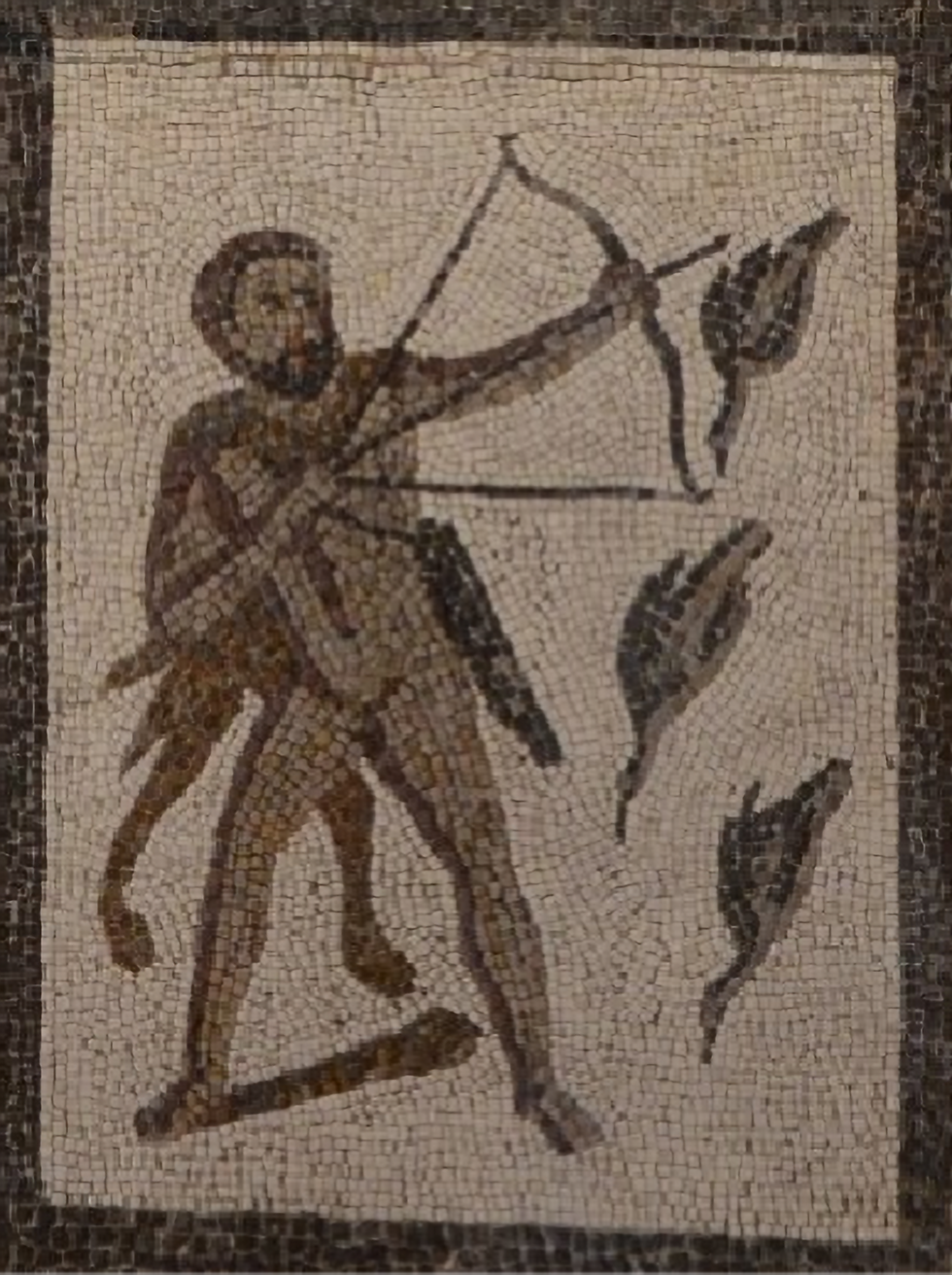
Although Heracles manages to rid the birds from the Stymphalian lake, he seems that he did not manage to kill them all, as many of them escaped to an island of Ares where Jason and his Argonauts encountered them in their own quest. Amphidamas, a member of the Argonaut crew, recounted to them the story of Heracles and his method for dealing with the killer-birds. As a result, on landing on the island, the Argonauts immediately started clashing their shields, driving the birds away.
For Percy Jackson fans who feel that the name Stymphalian Birds sounds familiar, the birds make a brief appearance in the book Percy Jackson and the Sea of Monsters when they attack Camp Half-Blood. Percy and Annabeth play loud music from a portable stereo owned by Chiron, the camp activity director, which gives the children of Apollo a chance to shoot them down.
Until next time,
λεῖος πλόος!
Written by Evyn Swan
Hellenic Museum Intern


Comments