
Athens vs Sparta: Would you rather be smart or tough?
Two Greek cities, only about 200km apart. One wanted its people to think, the other wanted its people to endure. Which was better?
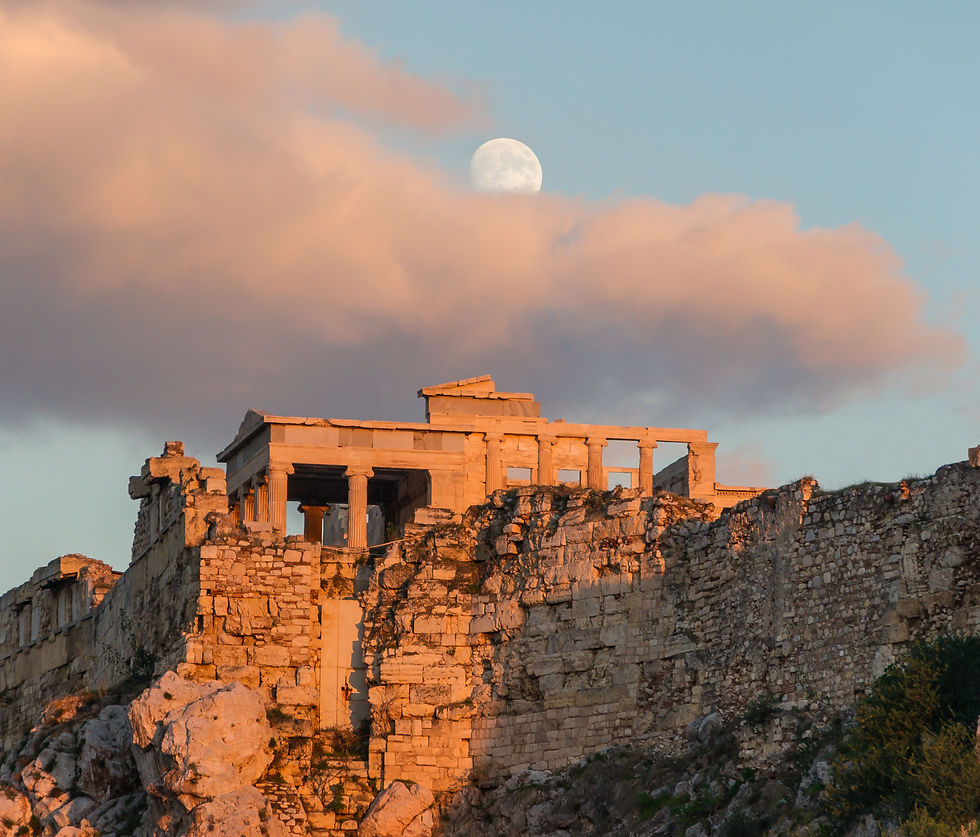
Ancient Greece wasn't one country. It was hundreds of independent city-states, each with its own rules, leaders, and way of life. A polis, as they were called, is where the word politics comes from. Athens and Sparta were two of the most famous city-states. Athens was on the coast and looked outward to trade, while Sparta sat inland in a valley, relying on farmland and conquered neighbours. Athens became known for brains: art, theatre, philosophy and democracy. Sparta became known for toughness: discipline, fitness and the best soldiers in Greece. Penelope, the wife of Odyssey, is from Sparta!
Sparta: the City of Warriors
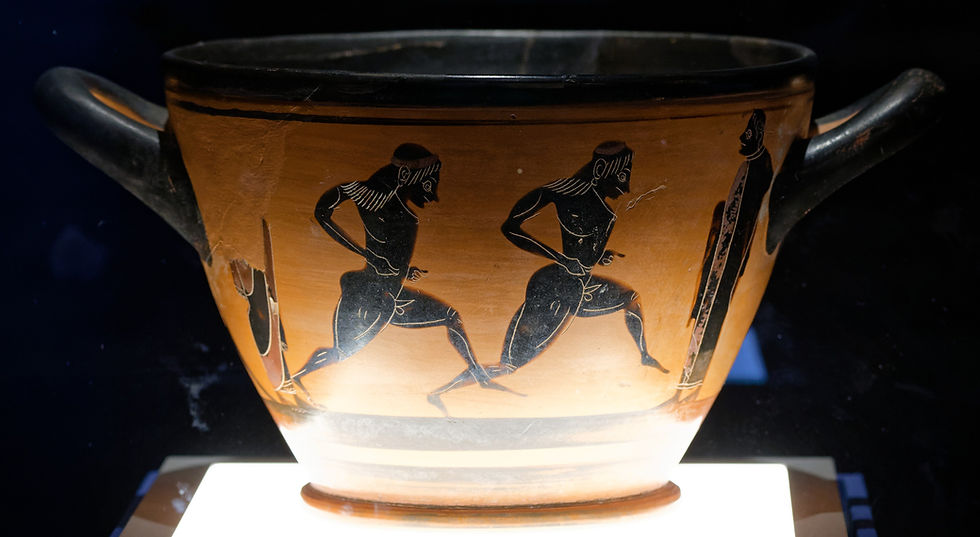
Sparta had a very different goal: to protect itself with the strongest army in Greece. Spartan boys left home at about age seven to begin the agoge, a harsh training programme. They learned to march, fight, go without comfort, and obey orders. They wore the same simple cloak all year, were often kept hungry, and were expected to put up with pain without complaining.
Spartan girls trained too. They ran, wrestled and threw javelins, and Spartan women had more freedom than women in most Greek cities, including the right to own property. Their job was to raise strong, confident children, so while their freedom was unusual in Greece, their role was still tied to the state's military goals.

A Spartan soldier was called a hoplite, and he fought in a tight formation called a phalanx, where each man's shield also protected the man beside him. Spartan men were full time soldiers, which was only possible because the helots (slaves) did the farming.
Athens: the City of Ideas
In Athens, citizens gathered to debate and vote on laws, an early form of democracy. Athenians built the Parthenon, a temple to the goddess Athena, which still stand on the Acropolis today. They wrote plays that are still performed today, and filled their city with thinkers like Socrates, Plato and Aristotle. Athens also had a powerful navy, because it relied on ships for trade and defence.
Athenian boys from wealthy families went to school to learn reading, writing, music and poetry, along with sport. Girls in Athens weren't usually sent to school and were taught at home, so being "smart" wasn't open to everyone.

In 480 BCE, a huge Persian army invaded Greece and Athens and Sparta put aside their differences to fight together. At the narrow pass of Thermopylae, King Leonidas and a small group of about 300 Spartans, joined by thousands of other Greeks, held off the Persians for days. They were outnumbered many times over, and a local traitor showed the Persians a mountain path around the pass. At sea, the Athenian navy won a famous victory at Salamis by luring the Persian fleet into a narrow strait where they could pick them off. Neither city could have won alone, but together they pushed back the Persians.
After the Persians were beaten, the two cities became rivals because Athens grew rich and powerful, and Sparta felt threatened. They fought a long conflict called the Peloponnesian War (431-404 BCE) where Athens led the Delian League, and Sparta the Peloponnesian League. A deadly plague struck Athens during the war, killing a large part of its population, including its leader Pericles. Sparta ended up winning (partly with money from Persia, the former enemy) but the war left all of Greece fractured, exhausted and poor which ended the Golden Age of Athens and paved the way for its eventual conquest by Macedonia a few short decades later.

SIDE BY SIDE | Athens | Sparta |
Government | Citizens voted on laws | Two kings and a small council |
Education | Reading, music, sport, debate | Military training from age 7 |
Famous for | Art, theatre, philosophy | Soldiers and discipline |
Strength | Navy and ideas | Land army |
Value | Curiosity | Self-control |
Neither city was fair by today's standards. Both relied on slavery. Sparta controlled a huge enslaved population called the helots, who farmed the land, and Athens enslaved many people too. In Athens, only free adult men born in the city could vote, so women, foreigners and enslaved people had no say.
Most of what we know about Sparta was written by outsiders, mainly Athenians and later Greek and Roman writers, because the Spartans wrote little themselves. Parts of the "tough Sparta" image are likely exaggerated, so it's important to treat these accounts with care as they may not represent the full picture.
Think About It
Is it better for a country to be strong, clever, or fair? Can it have all three?
What are the costs of long conflicts between neighbours?
How do we decide which parts of the past to admire and which to learn form?
Until next time,
λεῖος πλόος!
Written by Eleanor-Scarlett Russell
Education and Programs Officer
Hellenic Museum


Comments